The Nabataean Dam in Petra
The dam was one of the most important elements of infrastructure in ancient Petra. The Nabataeans developed an advanced hydraulic system to protect their city from the dangers of flash floods and seasonal torrents that threatened the Siq and its surrounding areas. They addressed this challenge through ingenious engineering designs aimed at diverting floodwaters, collecting water, and controlling its flow to prevent it from surging into the city’s passages and buildings.
The dam is located at the entrance of the Siq, the area most vulnerable to water accumulation from the upper wadis. From their earliest settlement in Petra, the Nabataeans recognized that the city’s architectural layout—carved into rock and flanking the narrow Siq—required an effective system to protect it from floods. Accordingly, they constructed dams, channels, stone culverts, and precisely carved rock-cut canals. Rainwater and floodwaters were diverted through a tunnel carved toward Wadi al-Muthlim, redirecting the flow away from the city, its streets, and buildings. This system preserved the stability of the Siq and prevented the destruction of Petra’s monumental façades after the dam was constructed.
.
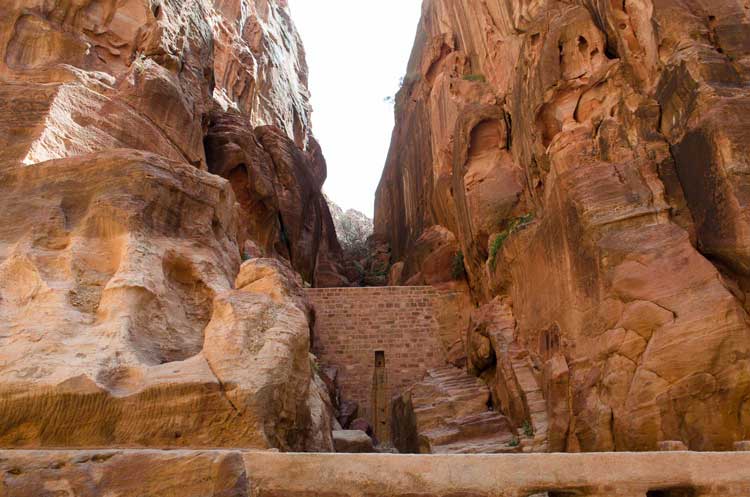
The Nabataeans built the dam using large, finely dressed stone blocks and employed dry-stone masonry techniques that allowed a limited amount of water to pass through without compromising structural integrity, enabling the dam to withstand the high pressure generated by floods. The system was further reinforced by a rock-cut tunnel approximately 88 meters long, used to divert water away from the Siq and considered one of the most significant engineering innovations of the ancient world.
Over time, as the original dam deteriorated, the Jordanian Department of Antiquities rebuilt a modern dam in 1964 on the site of the original Nabataean structure, using modern techniques that nonetheless reflect the essence of the ancient engineering design. This modern dam has helped protect the Siq, visitors, and surrounding archaeological sites from recurring winter floods.
The dam, in both its ancient and modern forms, reflects the Petra inhabitants’ deep understanding of the importance of water in daily life—for protection, agriculture, and drinking. It also stands as a living example of the Nabataeans’ ability to adapt to a harsh environment and construct advanced infrastructure that ensured the sustainability of their city. The dam remains a prominent testament to the ingenuity of a civilization that flourished in the heart of the desert.
Today, the dam is a key stop for visitors interested in understanding the Nabataean water-management system, clearly demonstrating how urban and engineering planning formed the foundation of Petra’s status as an advanced city in its time. The site continues to perform its protective function for the Siq to this day, affirming the enduring historical and practical value of this remarkable engineering achievement.